
Website Design for Beauty Brands
People rarely type the name of a brand they don't know. What they usually type is their own condition, such as how to use serum for oily skin or the order of moisturizer and sunscreen. The brand that appears in those search results is what gets considered, often before they even realize they're considering it.
What usually holds beauty brands back
Beauty buyers almost always read first, and what they read is written by someone else. They type in their skin concern, open three to five pages, compare ingredients, and only then look up the price on a marketplace. Your marketplace storefront isn't part of that reading stage, because it holds product descriptions written for people who have already decided. Brands with their own writing get in earlier, while the buyer is still gathering information and doesn't have a single candidate yet.
Most brands actually already have the material. Ingredient explanations, the order of use, and answers to the questions that come in every day have already been written in post captions or answered in the comments. What hasn't happened is organizing it into something that can still be found six months later. Posts are short-lived and can't be browsed by category, so a good piece you wrote in February is practically gone for someone searching for it in August.
The third obstacle is specific to this field: there are limits on what you can write. Beauty products in Indonesia are bound by marketing authorization rules, and cosmetics may not be promised to work like medicine. Gets rid of acne in seven days, permanent whitening, and cures are phrases that should never appear on your page, both because they put your licensing at risk and because readers are now immune to promises like that. Writing that says which ingredients are used, what users usually experience, and who the product is less suited for is harder to dispute and draws fewer complaints. For any sentence you're unsure about, ask whoever handles your product licensing before the page goes live.
What it can look like for beauty brands
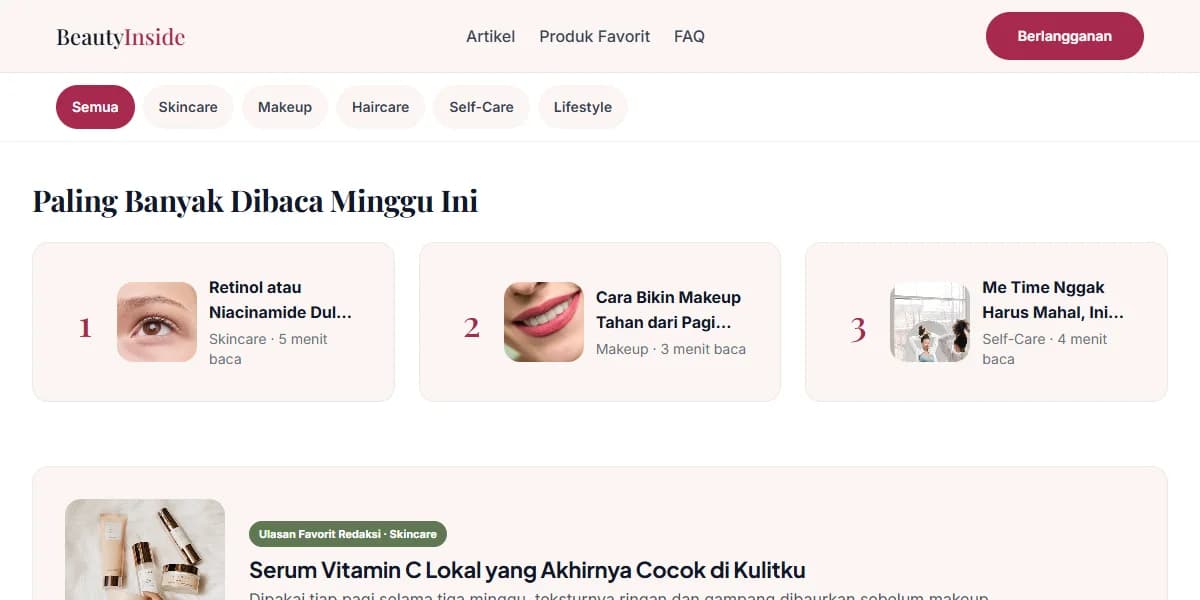
This Beauty Inside Blog demo was built by us as an example of its form, not a paid client website. It contains a blog: one featured article at the top, article cards that can be browsed by category, product review layouts along with their ratings, care guides, and an email subscription form at the bottom. This form is what we usually recommend for beauty brands, because the entrance for new visitors is almost always in the form of one article, and the new product page is opened after the article has been read.
What you get
For a beauty brand, the content that usually determines whether people return or not is this:
- Articles searched per category, such as by skin type, product type, or complaint, because people search based on their own condition
- The layout of reviews in the same format every time: main ingredients, texture, price, where to buy, suitable for whom, and not suitable for whom
- A guide to the order of use, including ingredients that should not be used together on the same night
- Product pages that link to official purchase sites, so readers don't end up at fake sellers
- Writer information and honest disclosure about products sent by the brand or purchased personally
- Publication date and last updated date on each article, because product formulas and prices change
- Email subscription form for repeat readers
What we don't recommend at the start: recommendation quizzes that ask about skin type and then produce a product list. The format is attractive and often requested, but there are two things attached to it. First, the answers are driven by rules you write yourself, and incorrect recommendations for problematic skin are mistakes that people remember for years. Second, such quizzes collect information about someone's skin condition, meaning you store fairly personal data without urgent need. Well-written guide articles do the same job without those two burdens.
Pricing for a beauty brand website
A new brand that's just starting out can opt for the Starter package, Rp 1.500.000, which already includes a domain, hosting, and SSL for the first year, and will be completed in around 3 days once we receive your complete materials.
If you plan to write regularly, the Business package, Rp 5.000.000, with a completion time of 1 to 2 weeks, is more suitable. This package includes a blog with categories, product photos stored in Cloudflare CDN so that image-heavy pages still load quickly, and 3 initial articles written by us so that your blog doesn't go live empty. A comparison of the packages can be found on the package page.
Questions we often get from beauty brands
- Is it allowed to write that our product removes acne?
It's best not to. Cosmetics are sold with distribution permits as cosmetics, and sentences that promise healing put them in the drug category. Write what your product does to the skin, what ingredients are used and their levels if they can be mentioned, and what users usually feel after a certain period. For sentences you're unsure about, ask the party handling your product's licensing before the page goes live, because they are the ones holding the documents.
- Can we use before and after photos?
Be cautious here, because such photos are already a claim of results even if there are no words accompanying them. If you still want to use them, take them with the same lighting and distance, do not edit, mention how long they were used and what else the person used during that period, and keep their written permission. Add a note that each person's results are different. If even one of these conditions cannot be met, it's safer not to post them.
- We already regularly collaborate with creators. What does a website add?
The content creator works on that day and then slows down a few days later, because the lifespan of a post is indeed short. The articles on your website move slowly at first and then continue to receive visitors for years, as long as the content still answers the same questions. Both can be connected: what the creator explains in thirty seconds you can write a longer version of, and then the link is put in the bio and in the post description.
- Our reviews mention other brands' products. Is it safe?
As long as you write your experience of using the product in a reasonable manner and do not accuse other people's products of being dangerous without basis, this is a common thing in beauty blogs. What needs to be maintained: mention that the product was sent by the brand in question, mention that the link generates a commission for you, and separate what is your personal opinion and what is an explanation from the packaging. Readers in this field check such things and conclude for themselves how far your writing can be trusted.
- How often do you need to write for it to be useful?
Two articles a month that continue consistently are more useful than ten in the first month and then stop, because articles need time before they start receiving visitors from searches. Start from the questions that really come into your messages, one question one article. If you're too busy to write, update old articles that have already been read by people, and that's often more impactful than adding new writing.
Next step
Compare what each package includes side by side, or first read what to prepare before you order.
Related pages
Clinic Website Design
A clinic website contains doctor practice schedules, service lists, branch information, and registration via WhatsApp. Prices start from Rp 1.500.000.
Barbershop Website Design
A barbershop website contains a list of haircut prices, a gallery of results, business hours, and a WhatsApp button. See the demo, prices start from Rp 1.500.000.
Online Store Website Design
Online store website design: a catalog with ordering over WhatsApp, or online checkout and payment. From Rp 5.000.000.
Company Profile Website Design
Company profile website design: services, projects, legal details, and contact information that prospective clients can verify. See the demo, from Rp 1.500.000.